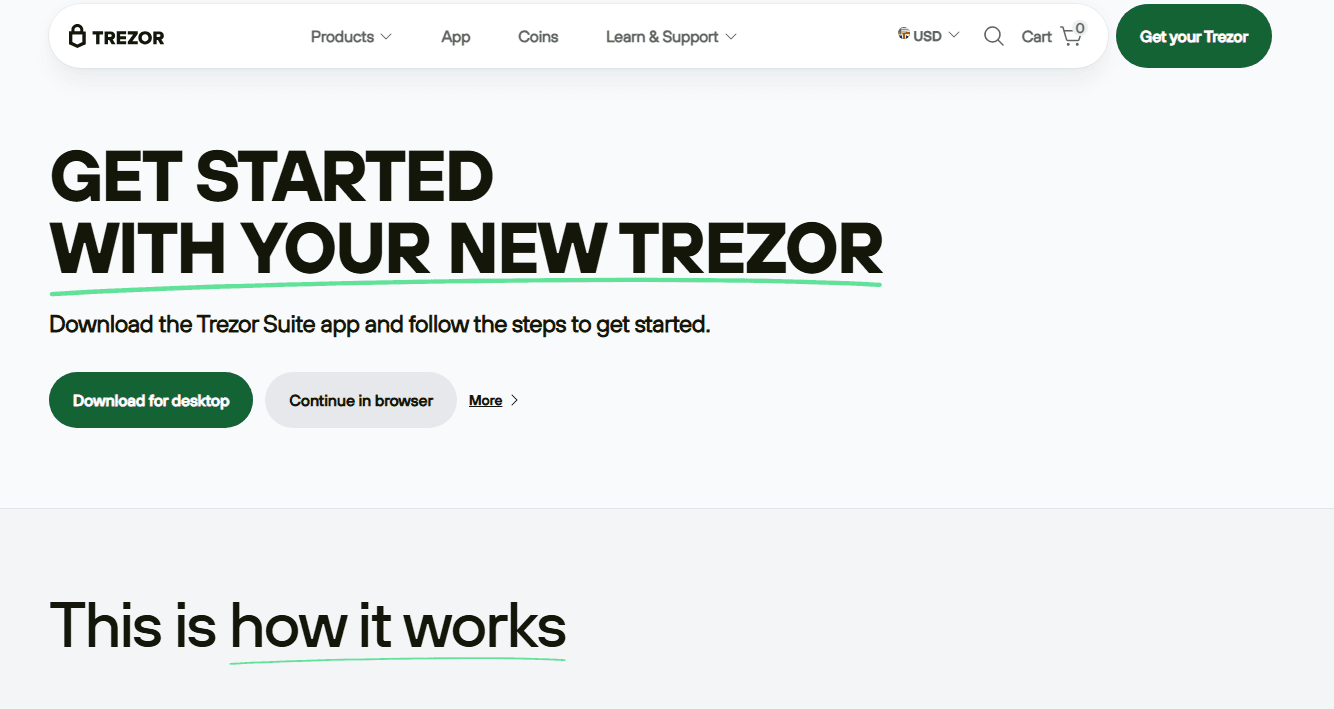
Trezor.io/Start: Your Complete Guide to Setting Up a Trezor Hardware Wallet Safely
Cryptocurrency ownership comes with a responsibility: protecting your digital assets. While many people start with mobile apps or exchange wallets, these methods can expose funds to potential hacking attempts or third-party risks. A hardware wallet like Trezor offers a safer alternative by storing your private keys offline. To begin using a Trezor device correctly, the first step is to follow the setup process provided through trezor.io/start, which ensures users configure their wallets securely and without compromise.
This comprehensive guide explains what trezor.io/start is, how to complete each stage of the setup process, and how to maintain the highest level of protection for your crypto holdings once your wallet is ready to use.
Why Trezor.io/Start Exists
Trezor directs every new user to trezor.io/start because hardware wallet security depends on proper initialization. This page acts as a central, verified location that walks you through:
Installing the right software
Updating firmware securely
Creating your wallet
Recording the recovery seed safely
Setting a PIN
Understanding how the device works
By using this official setup method, you avoid scams, fake applications, and unofficial tutorials that could compromise your crypto from day one.
Before You Begin: Inspecting Your New Trezor
Before connecting your Trezor to any device, make sure the package is authentic and untouched. Security starts with your hardware.
Check for:
A tightly sealed box without signs of tampering
A clean, undamaged device
Accessories such as the cable, cards, and booklet
Recovery seed cards that are blank
Trezor’s packaging is designed to reveal tampering attempts. If anything appears suspicious, pause the setup process and contact support for guidance.
Step 1: Navigating to Trezor.io/Start
Once your Trezor device is verified, open your browser and type trezor.io/start into the address bar. Typing the address manually prevents you from being tricked by fake websites that imitate the real page to steal user funds.
Once on the page, choose your specific model (Trezor Model One or Trezor Model T) to continue.
Step 2: Installing Trezor Suite
To manage your wallet, send transactions, and update your device, Trezor provides a dedicated software application called Trezor Suite. The setup page gives instructions on how to download it for your operating system.
Trezor Suite is designed with several priorities:
Security
Offline functionality
Support for numerous cryptocurrencies
A user-friendly dashboard
Once downloaded, install the application and open it. Trezor Suite will guide you through the first actions you need to take.
Step 3: Connecting Your Trezor Device
Using the provided cable, plug your Trezor into your computer. Once connected:
Your Trezor powers on
Trezor Suite detects the device
The software checks if your firmware needs an update
If a firmware update is required, install it before proceeding. Firmware updates typically include important security improvements, so applying them is important.
During this step, Trezor Suite also performs a device authenticity check to ensure your hardware is genuine and safe to use.
Step 4: Creating a New Wallet
After your device is recognized, Trezor Suite will prompt you to choose between creating a new wallet or recovering an existing one.
Choose Create New Wallet if this is your first time using Trezor.
Once you select this option:
The Trezor device generates your private keys internally
The keys never pass through your computer
Everything stays offline to maximize security
This isolated environment is what makes hardware wallets so much safer than software-only options.
Step 5: Backing Up Your Recovery Seed
Once your wallet is created, Trezor will display a recovery seed—a sequence of words that serves as the ultimate backup for your wallet. This seed can restore your wallet if your device is lost, stolen, or damaged.
During this step:
Words appear only on your Trezor screen
You must write them down exactly in the correct order
Trezor Suite may ask you to confirm specific words
The seed must never be photographed or typed onto your computer
Your recovery seed must always remain offline and private. Anyone with access to it can control your funds. This is why Trezor urges users to store their recovery seeds carefully in a secure location.
Step 6: Choosing a Strong PIN
Your PIN protects your Trezor device from unauthorized access. Without the PIN, no one—including you—can use the device to access assets or sign transactions.
When creating a PIN:
Choose a combination that isn’t predictable
Avoid repeating numbers or sequential patterns
Memorize your PIN or write it down privately
Never share it with anyone
The PIN is your first defense against physical theft of the device.
Step 7: Exploring Trezor Suite for the First Time
After securing your recovery seed and PIN, you will be taken to the main interface of Trezor Suite. The dashboard displays:
Your portfolio overview
Market information
Available accounts
Security recommendations
The layout is designed to be simple enough for newcomers while still offering advanced tools for experienced users.
Step 8: Adding Accounts for Different Cryptocurrencies
Trezor supports a wide range of cryptocurrencies, but each one requires its own dedicated account within Trezor Suite.
To add an account:
Click to add a new account
Select the cryptocurrency
Confirm the action on your Trezor device
Once the account is added, you can begin receiving and sending funds.
Step 9: Receiving Crypto Securely
Receiving cryptocurrency into your Trezor requires a few steps to ensure security:
Select the account you want to receive into
Click “Receive”
Display your receiving address
Confirm the address directly on your Trezor device
Share the address with the sender or transfer from your exchange
Always verify that the address shown in Trezor Suite matches what is on your Trezor device. This prevents malware from altering the address on your computer.
Step 10: Sending Crypto with Full Security
Sending crypto from your Trezor involves:
Selecting the account
Entering the recipient’s address
Choosing the amount
Reviewing details in Trezor Suite
Physically confirming the transaction on the Trezor device
Since Trezor requires manual approval, no transaction can occur without your intentional confirmation.
Maintaining Maximum Security After Setup
Setting up your Trezor correctly is only the beginning. Ongoing security practices are essential.
1. Protect Your Recovery Seed
Store it somewhere safe, dry, and private. Consider using fireproof or metal seed storage.
2. Keep Your Device Firmware Updated
Updates fix vulnerabilities and improve performance.
3. Never Enter Your Seed Online
If a site or software ever requests your seed, it is a scam.
4. Verify Everything on the Device Screen
Your Trezor device is the only trusted display for transaction details.
5. Use a Secure Environment
Avoid public computers and unsecured networks when interacting with Trezor Suite.
Troubleshooting Common Issues
Trezor Not Recognized
Try using a different cable, reconnecting the device, or restarting Trezor Suite.
Firmware Will Not Update
Make sure the cable is secure and your internet connection is stable, then retry.
Seed Words Don't Match During Recovery
Double-check spelling and order. Recovery phrases follow precise sequences.
Suite Not Loading Properly
Restart your computer or reinstall the application.
Final Thoughts
Trezor.io/start is the essential pathway for setting up your Trezor hardware wallet the right way. By following each step carefully—installing Trezor Suite, updating firmware, creating your wallet, backing up the recovery seed, and setting your PIN—you build a solid security foundation for safeguarding your cryptocurrency.
Once set up, your Trezor becomes a powerful shield against the risks associated with digital assets, allowing you to store, send, and receive crypto with confidence. When combined with strong personal security practices, Trezor provides one of the safest storage methods available in the crypto ecosystem.