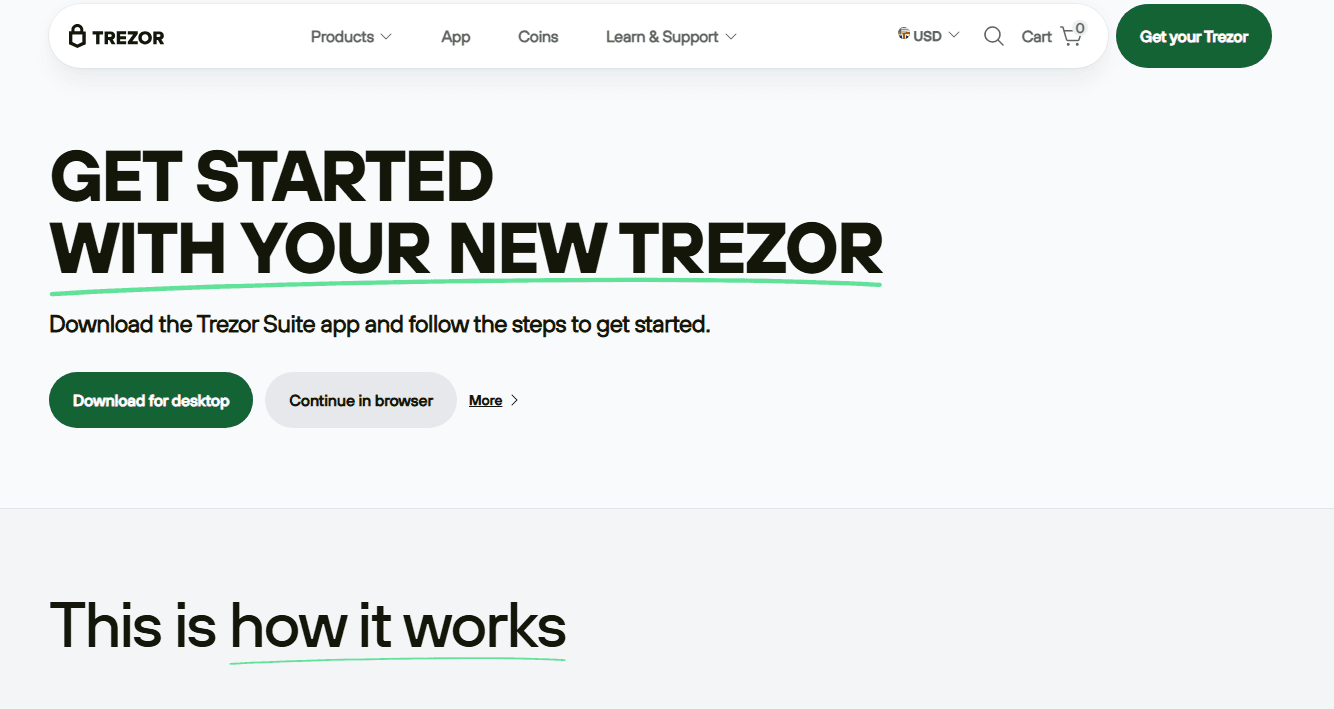
Trezor.io/Start: The Complete 1,200-Word Beginner’s Guide to Setting Up Your Trezor Hardware Wallet
In the world of digital currencies, protecting your assets is one of the most important responsibilities you have as an investor. With cyberattacks, exchange breaches, and phishing scams becoming more frequent, relying on online wallets alone is no longer enough. That’s where hardware wallets come into play—devices designed to keep your cryptocurrency secure by storing your private keys offline. Trezor is one of the most trusted names in this space, and the setup process begins at trezor.io/start.
This guide walks you through everything you need to know about using that setup page, what you should expect during the process, and how to ensure your hardware wallet remains fully secure. Whether you're using a Trezor Model One or a Trezor Model T, this guide provides clear steps and practical advice.
What Trezor.io/Start Is Designed For
The purpose of trezor.io/start is simple: to guide new users through the secure initialization of their hardware wallet. Instead of providing printed setup instructions—which can quickly become outdated—Trezor directs all users to a digital platform. This ensures:
You download the correct software
You avoid misleading or malicious third-party websites
You configure your device using the safest method
You learn about essential security steps
Trezor.io/start acts as the official onboarding portal, helping you move from unboxing your device to having a fully functional, secure crypto wallet.
Unboxing Your Trezor: What to Look For
Before visiting the setup page or plugging in your device, inspect your Trezor package carefully. Trezor products arrive in sealed boxes designed to show if someone has tampered with them.
Here’s what you should verify:
The box should not appear opened or resealed
The device should look factory-fresh, with no surface damage
Certified holographic or tamper-evident elements should be intact
Accessories such as the USB cable, recovery cards, and booklet should be included
If something feels suspicious, do not continue with the setup. Authenticity matters when dealing with cryptocurrency security.
Step 1: Visit Trezor.io/Start
The setup page is the first official step. Type the address into your browser yourself instead of clicking on a link. This small precaution helps prevent falling victim to phishing attempts designed to look like legitimate Trezor websites.
Once you arrive at the page, select your hardware model. The portal will automatically show instructions specific to your device.
Step 2: Install Trezor Suite
Trezor Suite is the main software interface used to control your hardware wallet. It allows you to:
Access your crypto balances
Send and receive transactions
Update device firmware
Secure your wallet with different settings
Monitor your portfolio in real time
Trezor Suite is available for desktop operating systems and is designed to run securely offline when needed. After downloading, open the installer and follow the on-screen instructions.
Once installed, launch Trezor Suite.
Step 3: Connect Your Device
Using the provided USB cable, connect your Trezor device to your computer. When connected, your device powers on and waits for interaction through Trezor Suite.
During this step:
Trezor Suite recognizes the device
It checks for firmware updates
It verifies the authenticity of the hardware
If your Trezor device shows that it needs new firmware, follow the steps to apply the update. Firmware updates are extremely important because they contain security improvements and support for additional cryptocurrencies.
Step 4: Create a New Wallet
After the device is ready, Trezor Suite will present two options:
Create Wallet or Recover Wallet.
Choose Create Wallet if you are using the device for the first time and want to generate a new, unique crypto wallet.
When you create a wallet on Trezor:
The private keys are generated directly on the device
The keys never leave the hardware
The process is done offline, ensuring maximum safety
This makes your wallet completely resistant to online attacks.
Step 5: Secure Your Recovery Seed
After creating a wallet, the device will generate a recovery seed. This is a list of 12, 18, or 24 words shown directly on the Trezor device screen.
This recovery seed is the single most important part of your setup. It acts as:
The master backup of your wallet
The universal key that restores your funds
The only way to recover your crypto if your Trezor is lost or damaged
Write the words down exactly as they appear, in the precise order shown. Use the provided recovery card or a metal backup plate. Never:
Store the seed digitally
Photograph the words
Type the seed into any app or website
Share the seed with anyone
Anyone with this seed can take your funds. After writing the words, Trezor Suite will ask you to confirm several of them to ensure accuracy.
Step 6: Set Up Your PIN
Your PIN protects the device itself. Without the PIN, no one—not even you—can access the wallet.
When creating a PIN:
Use a sequence you won’t forget
Avoid simple patterns
Make it long enough to protect against brute-force attempts
The PIN is entered manually on the Trezor device each time you connect it. This step ensures that even if someone gains physical access to your device, they cannot access your assets.
Step 7: Access Your Dashboard in Trezor Suite
Once your wallet is created and secured, Trezor Suite brings you to the main dashboard. This user-friendly interface shows:
Your total portfolio value
Individual crypto account balances
Market charts
Recent transactions
You can now begin using your wallet to manage cryptocurrency securely.
Step 8: Add Crypto Accounts
A Trezor wallet supports many different cryptocurrencies, but each one must be added manually in Trezor Suite before you can use it.
To add an account:
Select the option to create a new account
Choose the cryptocurrency you want
Confirm the action on the Trezor device
Once added, that account becomes visible on your dashboard.
Step 9: Receive Cryptocurrency
To receive funds into your new wallet:
Choose the account you want to deposit into
Click on the “Receive” option
Generate a receiving address
Confirm the address on your Trezor device screen
Share the address with the sender
The confirmation step is crucial because it prevents fake software or compromised computers from replacing your address.
Step 10: Send Cryptocurrency
Sending cryptocurrency is just as simple, but more secure than on most wallets:
Enter or paste the address you want to send to
Choose the amount
Review the transaction details in Trezor Suite
Confirm the transaction on your Trezor device
The device requires your physical approval before the transaction is broadcast, ensuring that no unauthorized transfers can occur.
Essential Security Tips After Setup
Even after setting up your device through trezor.io/start, security is an ongoing responsibility. Keep these principles in mind:
1. Your Recovery Seed Is the Ultimate Key
If someone steals your recovery seed, they can access your assets without the device.
2. Never Enter Your Recovery Words Online
Trezor Suite and the Trezor device will never ask for your seed during regular usage.
3. Keep Firmware Updated
Firmware updates often include critical security enhancements.
4. Double-Check Every Address on the Trezor Device
Never rely solely on what appears on your computer screen.
5. Store Your Trezor Safely
Keep it in a secure location when not in use.
Common Setup Problems and Solutions
Device Not Detected
Try another USB cable or port, restart your computer, or reconnect the device.
Firmware Update Fails
Retry with a stable connection and ensure the device isn’t unplugged during the update.
Incorrect Seed During Backup
Make sure you copied every word exactly as shown on the device screen.
Suite Not Opening
Restart your computer or reinstall Trezor Suite.
Conclusion
Trezor.io/start is the official pathway to establishing a secure and trustworthy cryptocurrency wallet with your Trezor device. By following the steps carefully—downloading Trezor Suite, creating your wallet, securing your recovery seed, and setting a strong PIN—you ensure that your funds remain protected from both online and offline threats.
Once fully set up, you can confidently manage your digital assets, make transactions, check your portfolio, and explore all the features Trezor has to offer. This setup process is the foundation of your crypto security, and with proper maintenance, your Trezor wallet will keep your assets safe for years to come.